




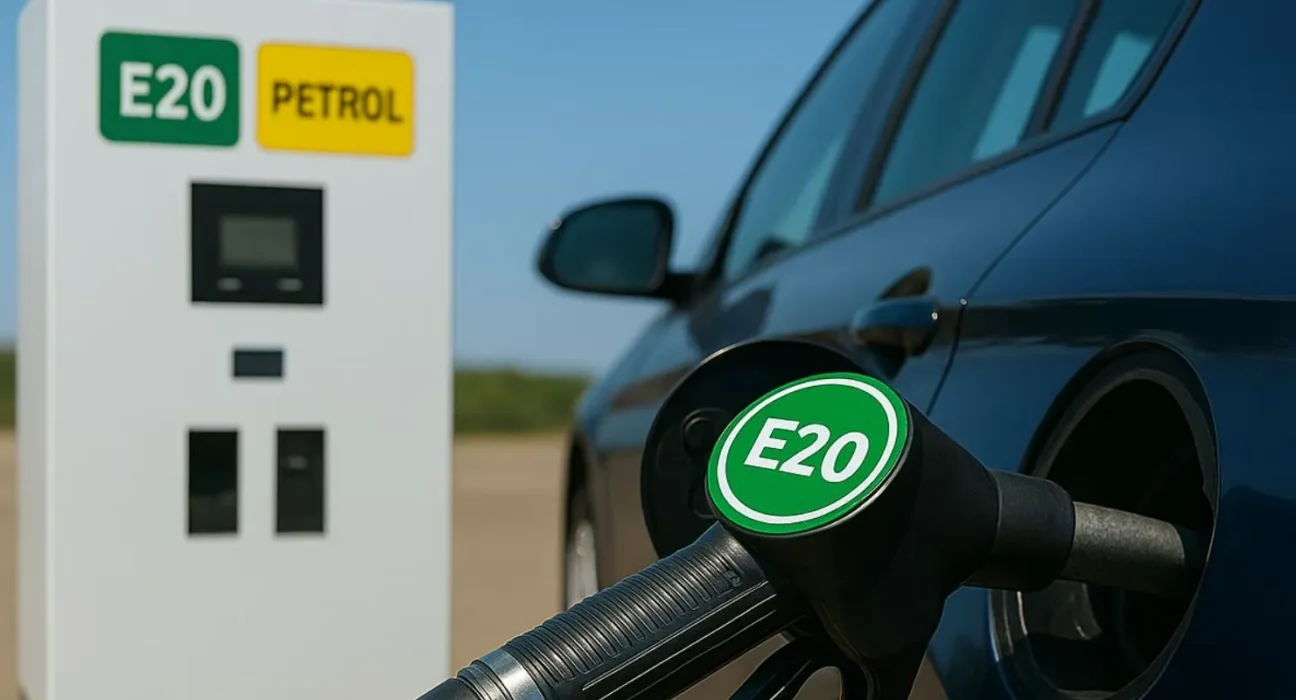
The Ministry of Petroleum and Natural Gas has addressed public concerns over E20 petrol, stating that while vehicles may experience a 3–5% drop in fuel efficiency, the long-term environmental and economic benefits are significantly greater. According to the ministry, E20 fuel helps reduce emissions, lowers India’s dependence on imported crude oil, strengthens energy security, and supports domestic ethanol production.
The ministry also clarified that E20 petrol offers a higher octane rating, which can improve engine performance, smoother combustion, and better vehicle pickup. Officials emphasized that the transition to E20 was not rushed and was preceded by extensive testing in collaboration with automobile manufacturers. Responding to concerns about engine safety, the ministry said that comprehensive tests on engines, fuel systems, and vehicle components found no major issues related to corrosion or accelerated wear.
Feedback from leading automakers, including Maruti Suzuki and Hero MotoCorp, also did not indicate significant engine damage caused by E20 fuel. On demands to offer multiple fuel options such as regular petrol, E10, and E20 at fuel stations, the government said maintaining separate supply chains nationwide would increase costs and create logistical challenges for fuel retailers.
The government reiterated that the primary objective of the E20 ethanol-blending programme is not to reduce fuel prices, but to cut crude oil imports, reduce carbon emissions, enhance energy security, and provide better income opportunities for farmers. According to the ministry, the ethanol blending initiative has already helped India save around ₹1.97 lakh crore in foreign exchange while reducing crude oil imports and greenhouse gas emissions. The ministry has also urged the public to rely on verified information and not misinformation regarding E20 fuel.