





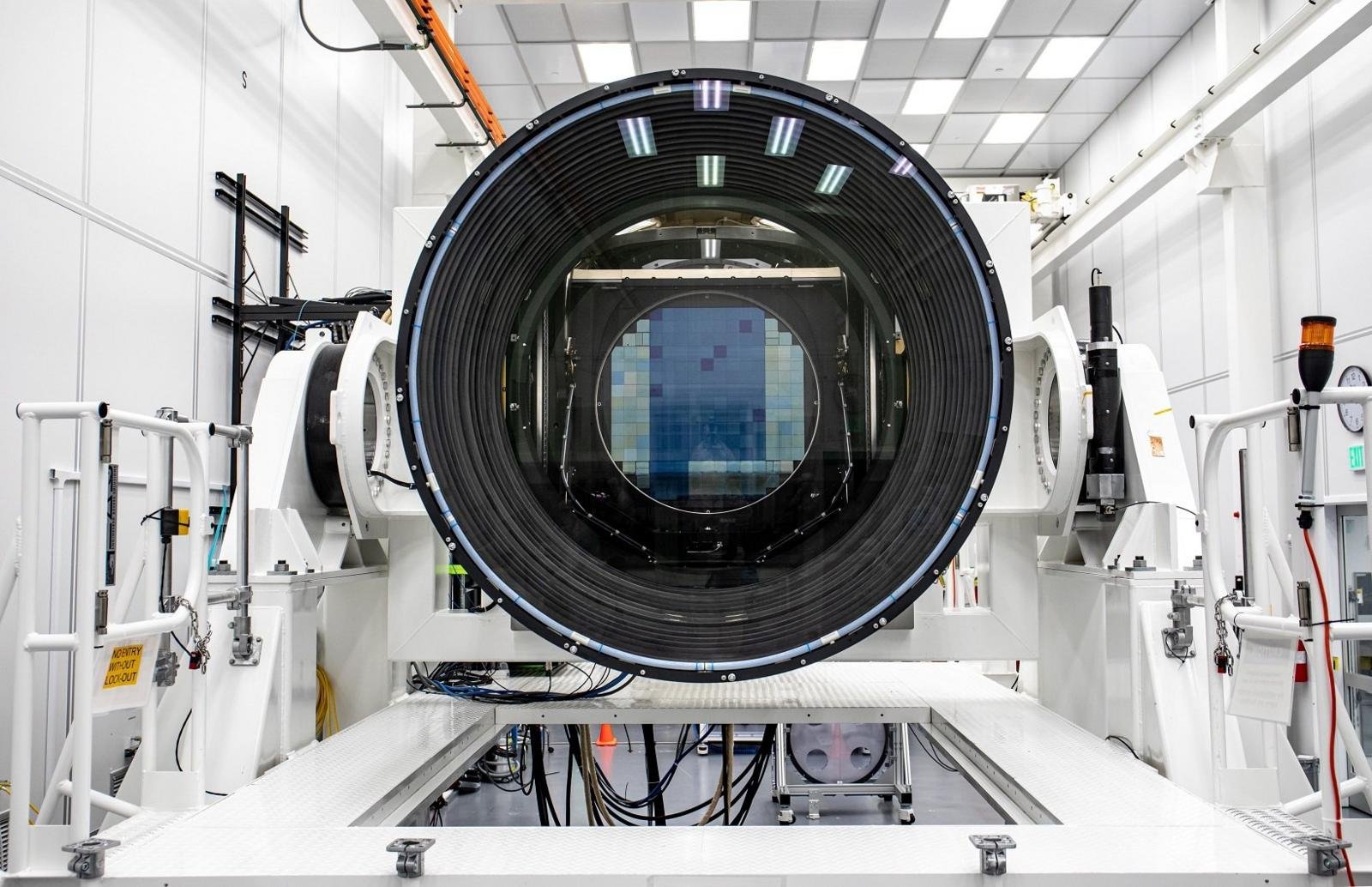
The world’s largest digital camera has officially begun one of the most ambitious astronomy projects ever undertaken. Located at the Vera C. Rubin Observatory in Chile, the Legacy Survey of Space and Time (LSST) will spend the next 10 years capturing detailed images of the night sky, helping scientists unlock some of the universe’s greatest mysteries. Equipped with the most powerful digital imaging system ever built for astronomy, the observatory will repeatedly scan the southern sky, recording everything from tiny asteroids and exploding stars to distant galaxies and supermassive black holes. The massive stream of data is expected to transform our understanding of the cosmos, including the nature of dark matter, dark energy, and the evolution of the universe.
Indian scientists are playing a significant role in this global scientific mission. Researchers from the Inter-University Centre for Astronomy and Astrophysics (IUCAA), Pune, and the National Centre for Radio Astrophysics (NCRA-TIFR) are contributing to several key research areas. According to Surhud More, Rubin-IUCAA Program Manager, the LSST marks the beginning of a new era in astronomy, offering unprecedented opportunities to study the formation of the solar system, stellar explosions, black holes, and the large-scale structure of the universe.
A major focus of the Indian research team is gravitational lensing—a phenomenon predicted by Albert Einstein, where the gravity of massive celestial objects bends light from distant galaxies. Scientists expect the observatory to discover more than 10,000 gravitational lenses, enabling researchers to measure the universe’s age, expansion rate, and hidden cosmic structures with greater precision. The Rubin Observatory will also provide astronomers with deep-sky images containing nearly 20 billion galaxies, allowing researchers to explore billions of years of cosmic history. With its unprecedented scale and precision, the LSST is expected to redefine modern astronomy and deliver groundbreaking discoveries throughout the next decade.