




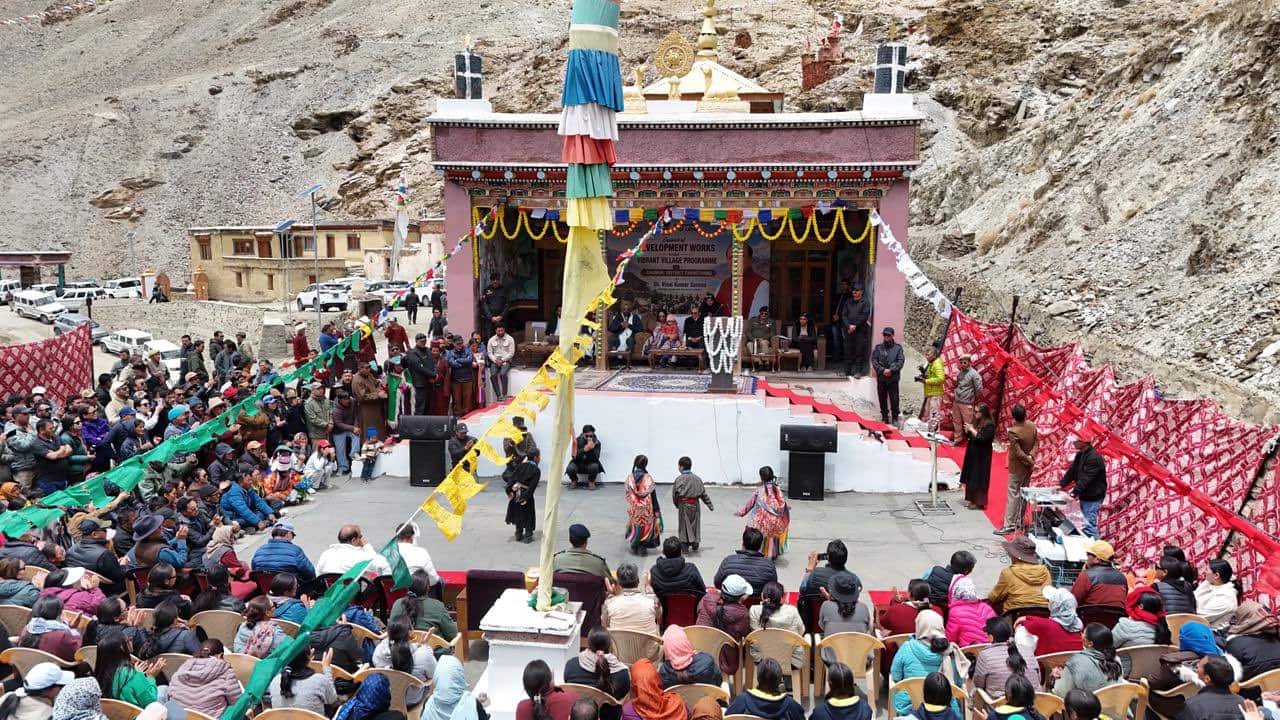
A historic development has taken place along the India-China border in Ladakh, where Chumur village has been selected as India’s first model border village under the Centre’s Vibrant Villages Programme. The foundation stone for the project was laid by Ladakh Lieutenant Governor Vinay Kumar Saxena, marking a significant step toward strengthening border infrastructure and boosting local livelihoods in high-altitude regions.
Located at an altitude of 16,700 feet, Chumur is home to just 24 families and 91 residents, whose primary livelihood revolves around Pashmina production. The project aims to transform this remote settlement into a self-reliant, climate-resilient and tourism-supported border village, aligned with Prime Minister Narendra Modi’s vision of “first villages” instead of “last villages.” The development plan is based on four key pillars: modern infrastructure, livelihood generation, all-weather connectivity, and civil-security force integration.
Under the initiative, each family will receive south-facing solar-powered housing designed to withstand extreme cold conditions that can drop as low as minus 35 degrees Celsius. Homes will also include sanitation facilities, space for homestays, kitchen gardens, livestock shelters, and fodder storage. The project is also expected to boost tourism and the local Pashmina industry by developing Chumur as a key hub in the Korzok-Hanle tourism circuit. Community cafés, handicraft promotion centres, and training facilities for Pashmina value addition and branding will be established, creating new income opportunities and helping reduce migration from border areas.
In addition, a high-tech greenhouse measuring 90×27 feet will be set up to enable year-round vegetable cultivation. The produce will not only support local consumption but also supply the Indian Army and ITBP, ensuring a stable market for villagers while strengthening civil-military cooperation in the region. Essential infrastructure such as schools, primary health centres, community buildings, parks, tourism interpretation centres, clean water supply, digital connectivity, solar energy systems, and waste management facilities will also be developed. Officials say the initiative will enhance both economic growth and strategic presence in the sensitive border area.