



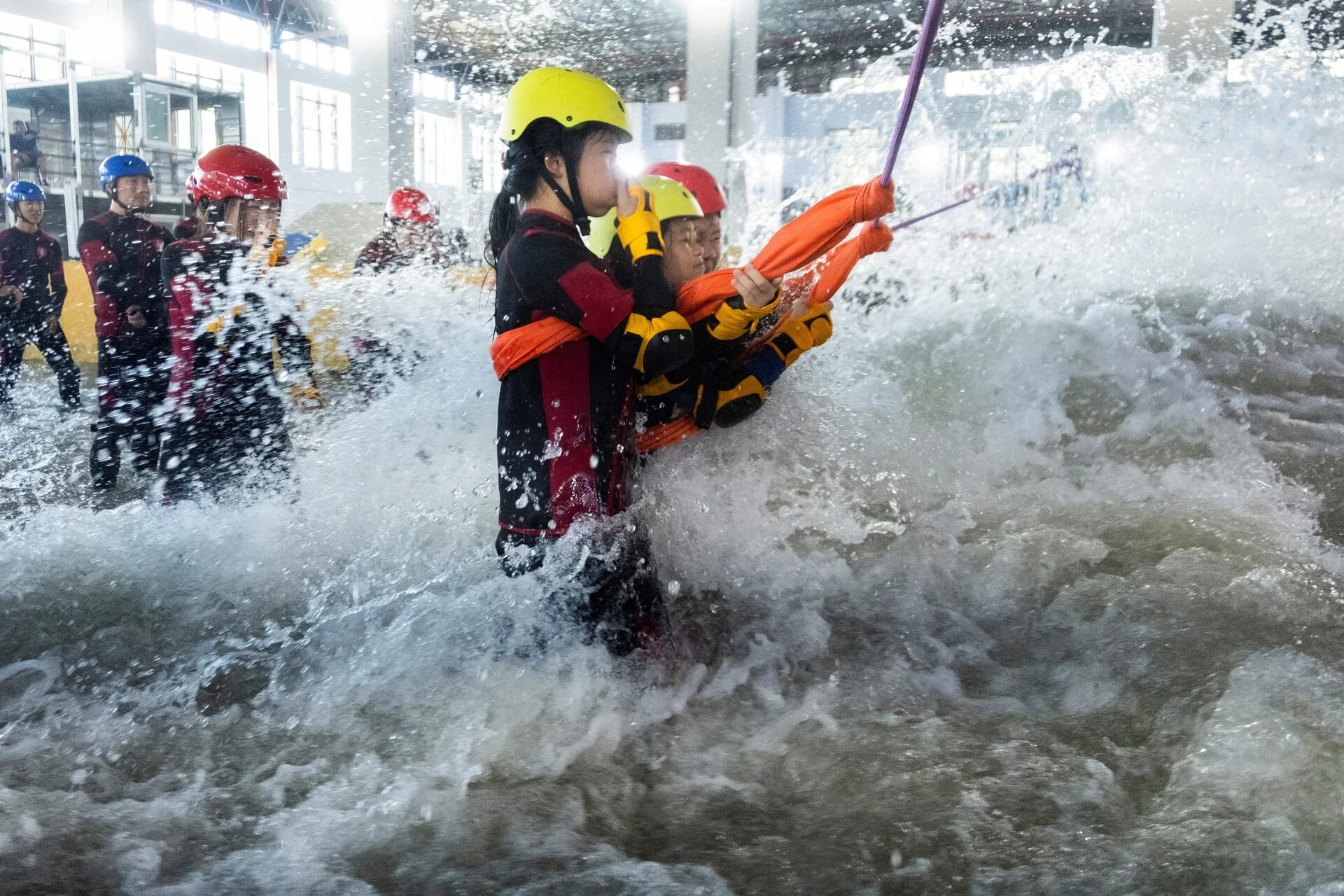
A new travel trend is gaining attention in China, where young adventurers are paying to experience simulated typhoons, flash floods and other extreme natural disasters. Unlike traditional “dark tourism,” which usually involves visiting places associated with historical tragedies, this new format combines thrill-seeking with practical survival and disaster-response training. At the centre of the trend is Lvxing Base in Hangzhou, an immersive disaster-simulation facility founded by Chinese explorers Zhang Xinyu and Liang Hong. The centre can reportedly recreate typhoon-force winds of up to 165 km/h, along with torrential rainfall and sudden urban flooding. Participants wear protective suits and helmets while trained instructors guide them through evacuation, rescue and emergency-response exercises.
The experience comes at a significant price. An individual adult pass reportedly costs 899 yuan, while family packages can approach 5,000 yuan and include wilderness survival and water-rescue training, with selected activities available for children aged six to 14. Since opening in late 2024, the facility has reportedly attracted more than 160,000 visits, highlighting growing demand for unconventional, high-intensity travel experiences. The trend has also sparked debate online. Supporters say realistic simulations can teach valuable survival skills and improve disaster preparedness, while critics question whether turning disasters into paid entertainment risks trivialising the experiences of people who have actually lost homes, livelihoods or loved ones in real catastrophes. Either way, China’s disaster-simulation trend is giving adventure tourism an extreme new meaning.