





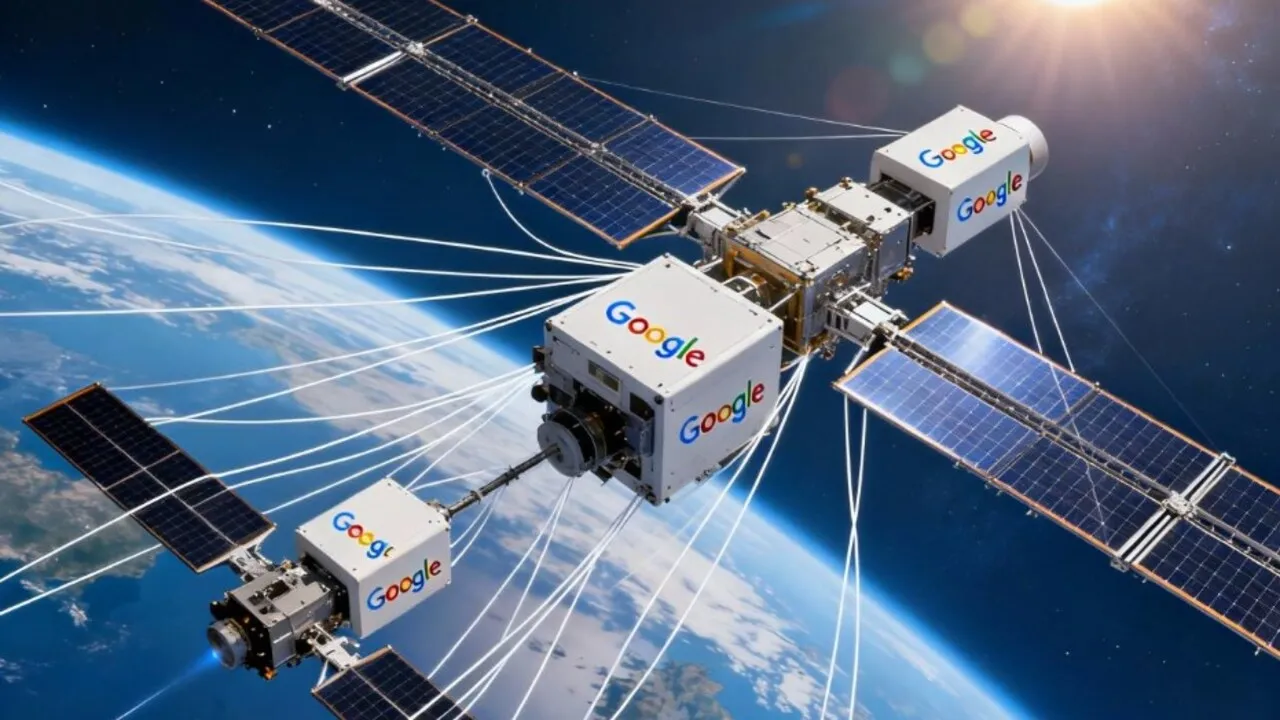
Google is preparing to take artificial intelligence beyond Earth with its ambitious Project Suncatcher, a research initiative aimed at powering AI computing systems using solar energy in space. The company is targeting early 2029 to launch AI-equipped satellites aboard Blue Origin’s reusable New Glenn rocket. The project explores whether space-based computing infrastructure could reduce the growing demand for electricity, land and cooling systems associated with traditional data centres on Earth. By harnessing solar energy in orbit, Google hopes to investigate a new approach to supporting the energy-intensive requirements of advanced AI technology.
According to Travis Beals, Senior Director of Project Suncatcher at Google, the collaboration with Blue Origin represents an important step towards exploring solar-powered AI computing in space. Blue Origin’s New Glenn rocket is designed to transport large payloads into orbit and offers reusable launch capabilities. Project Suncatcher envisions a network of small, solar-powered satellites equipped with Google’s specialised Tensor Processing Units (TPUs). These satellites would communicate through high-speed optical links, allowing them to operate as a distributed computing system.
The satellites are planned for a sun-synchronous orbit designed to maximise exposure to sunlight. Google is exploring whether individual spacecraft could eventually deliver computing capabilities comparable to a data centre rack, potentially enabling complex AI workloads to operate beyond Earth’s atmosphere. However, the technology remains experimental. Challenges such as radiation exposure, thermal management, high-speed communication, maintenance and launch costs must be addressed before large-scale deployment becomes practical. For now, the proposed 2029 launch remains a research milestone rather than the beginning of a fully operational space-based AI data centre.