





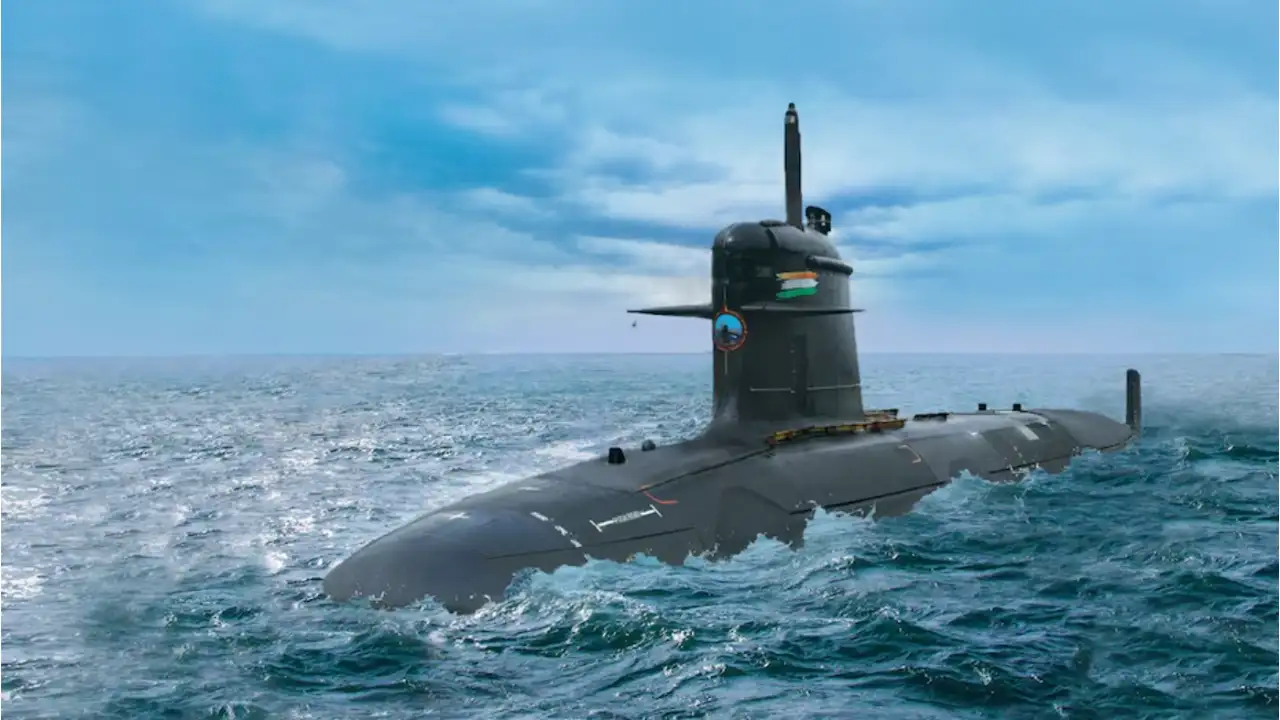
India has taken a major step toward strengthening its naval power with the finalization of a massive ₹99,000 crore submarine deal under the Indian Navy’s ambitious Project-75I programme. State-run Mazagon Dock Shipbuilders Limited (MDL) and German defense giant Thyssenkrupp Marine Systems (TKMS) have successfully concluded commercial negotiations for the construction of six next-generation diesel-electric attack submarines. The deal is expected to be formally signed soon and is being seen as one of India’s most significant defense modernization projects in recent years. The submarines will be equipped with advanced fuel-cell based Air Independent Propulsion (AIP) technology, allowing them to remain underwater for weeks without surfacing.
Unlike conventional diesel-electric submarines that need to surface frequently to recharge batteries, these AIP-powered vessels can operate silently beneath the sea for extended periods, significantly reducing the risk of detection by enemy radar or satellite systems. The fuel-cell technology generates electricity through a chemical process, making the submarines extremely quiet and highly effective for stealth operations, earning them the reputation of “silent hunters.” The project is a major boost to India’s “Make in India” and “Atmanirbhar Bharat” initiatives. Under the strategic partnership model, the foreign technology will be transferred to India, while all six submarines will be built domestically at MDL’s shipyard in Mumbai. MDL has already demonstrated its submarine-building capability through the successful construction of the Scorpene-class submarines for the Indian Navy.
Defense experts believe the deal will significantly enhance India’s underwater combat capabilities, especially at a time of rising geopolitical tensions in the Indian Ocean and Indo-Pacific regions. The new submarines are expected to provide the Indian Navy with greater operational endurance, stealth, and strategic deterrence against emerging maritime threats, including increasing Chinese naval activity in the region. With this agreement, India moves closer to building a stronger and more self-reliant naval force capable of dominating underwater warfare in the decades ahead.