




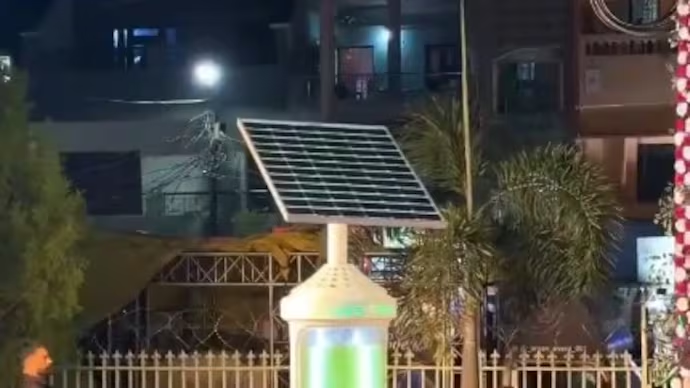
India has taken a notable step in urban green technology with the installation of its first “Algae Tree” in Bhopal, placed inside Swami Vivekananda Park in the Ashoka Garden area. The project, developed by Mushroom World Group, was inaugurated on May 1 in the presence of Cabinet Minister Vishwas Sarang. The installation is not a traditional tree but a micro-algae based “liquid tree” system designed to absorb carbon dioxide and release oxygen. According to developers, a single unit is capable of performing the environmental function equivalent to nearly 25 mature trees and can absorb up to 1.5 tonnes of CO₂ annually. The system is also equipped with solar panels, allowing it to operate on clean, renewable energy.
The concept aims to address urban air pollution by using compact, engineered bio-reactors that cultivate microalgae, which naturally consume CO₂ during photosynthesis. Supporters of the project describe it as a futuristic solution for densely populated cities where space for plantation is limited. However, the initiative has also sparked debate among environmental observers. While some hail it as an innovative step toward sustainable urban infrastructure, others question whether such engineered systems can truly substitute natural tree ecosystems or if they represent a form of “greenwashing” — where technological claims may overstate environmental impact. As cities continue to search for scalable climate solutions, Bhopal’s Algae Tree has now become a symbol of both India’s growing green-tech ambition and the ongoing global debate over technology-driven environmental fixes versus traditional afforestation.