





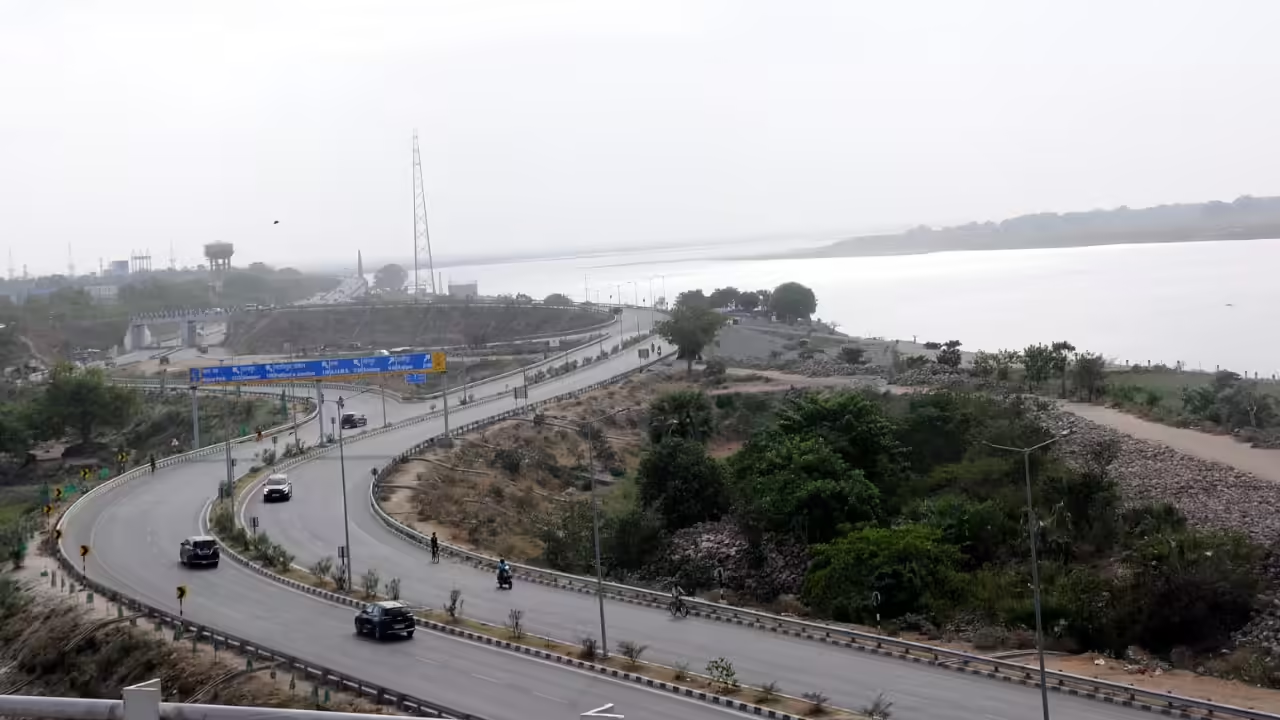
Patna is poised for a major urban and cultural transformation as the Bihar government advances the ambitious JP Ganga Path Integrated Park Project, a landmark initiative designed to convert the capital’s Ganga riverfront into a world-class public destination. Combining heritage conservation, tourism development, environmental sustainability, and modern urban infrastructure, the project is expected to emerge as one of the largest riverfront developments in eastern India. Leveraging Bihar’s unique advantage of a vast and naturally accessible Ganga riverbank, the project aims to showcase the historic legacy of ancient Pataliputra while creating a vibrant and contemporary waterfront experience. Officials believe the initiative will significantly strengthen Bihar’s identity and elevate its position on both the national and international tourism map.
The development will be executed in phases. In the first phase, a nearly six-kilometre-long green park corridor is being developed along the riverfront. The second phase will extend the corridor to approximately 26 kilometres, connecting the historic Patna City region and creating a continuous green and tourism corridor along the Ganga. The state government has emphasized that the project is not merely a beautification exercise but a comprehensive model integrating tourism, culture, environmental conservation, and public amenities. Once completed, the riverfront is expected to become a hub for water-based tourism, cultural events, public recreation, heritage walks, and local entrepreneurship.
A distinctive cultural identity will be woven throughout the project. Around 50 commercial outlets planned along the corridor will be developed around a unique “Ganga and Pataliputra” theme. To create a signature icon for these establishments, the state will organize a design competition offering prizes of ₹51,000, ₹21,000, and ₹11,000 for the top three entries. Authorities have directed that the architectural design, signage, public spaces, and commercial structures should prominently reflect Bihar’s rich historical and cultural heritage.
Environmental sustainability forms a central pillar of the project. Native tree species such as Peepal, Banyan, and Pakar will be prioritized to strengthen the local ecosystem and provide long-term green cover. Flowering trees including Amaltas, Gulmohar, and Semal will be planted to create thematic floral landscapes. Special seating areas facing the Ganga will allow visitors to enjoy panoramic river views while enhancing the overall public experience. To ensure seamless visitor access, authorities are preparing an integrated plan covering parking facilities, entry and exit points, underpasses, commercial zones, and public services. Drone imagery and advanced visual renderings will also be developed to present the project’s current progress and future vision to citizens and potential visitors.
The project involves coordinated efforts across multiple government agencies. The Tourism Department is leading the development of tourism infrastructure, water metro facilities, and ghats. The Water Resources Department will oversee the Ganga channel and water-based infrastructure, while the Urban Development and Housing Department is responsible for Patna Haat, the Waste-to-Wonder Park, retail spaces, and civic amenities. BUDCO is strengthening sewerage and treated water management systems, and the Environment, Forest and Climate Change Department is developing the green zones, botanical garden, and butterfly park. Overall project execution and coordination are being managed by the Bihar State Road Development Corporation Limited (BSRDCL). According to officials, most project components are progressing as scheduled, with power-related works being the primary pending challenge. Departments have been instructed to accelerate execution and complete key milestones by August 31.