





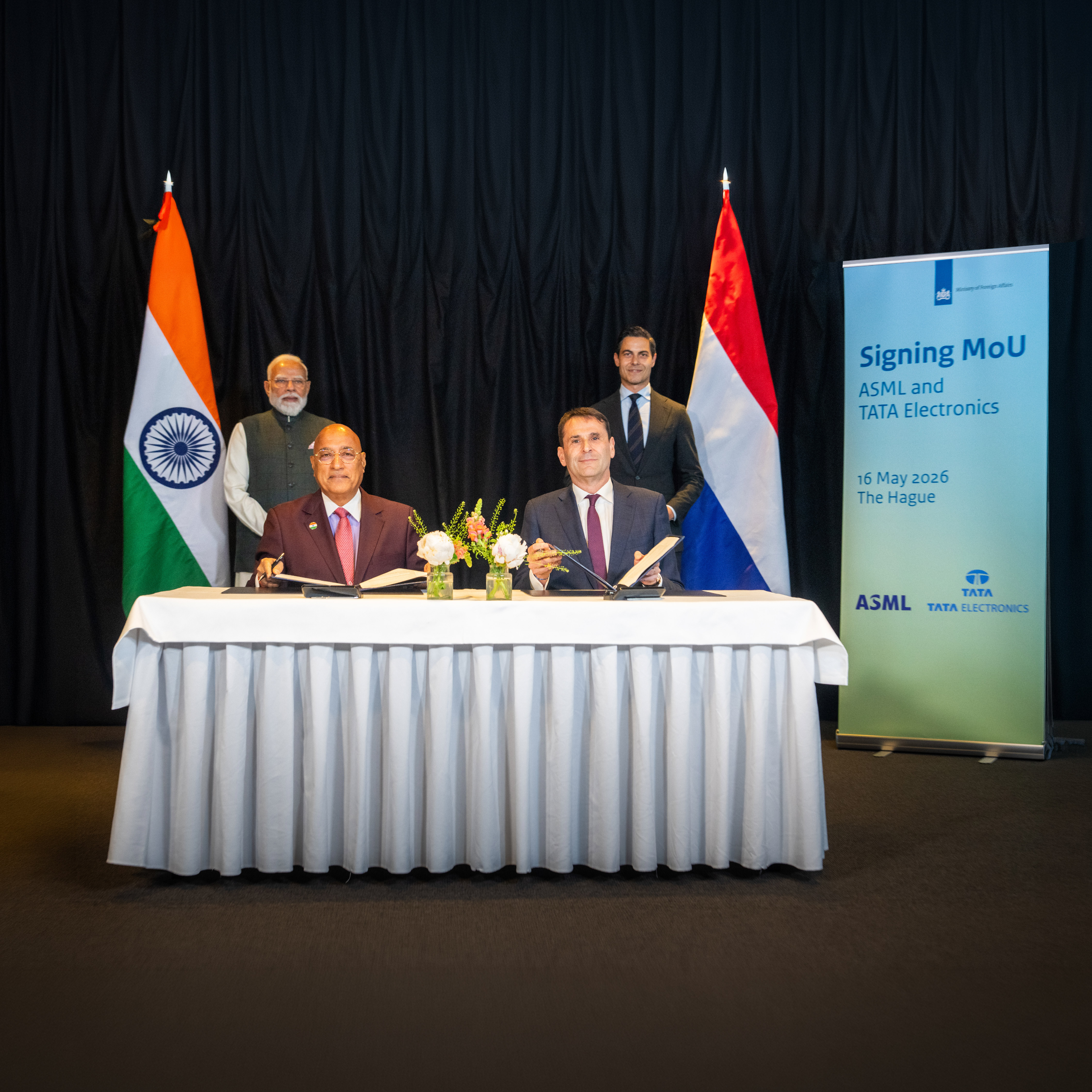
In a major boost to India’s semiconductor ecosystem, Tata Electronics and ASML have signed a strategic partnership to accelerate chip manufacturing capabilities in the country. The agreement was announced during Prime Minister Narendra Modi’s visit to the Netherlands. The collaboration focuses on enabling advanced semiconductor production at Tata Electronics’ upcoming 300 mm fabrication plant in Dholera, Gujarat. ASML, known globally for its leadership in lithography systems critical for advanced chip manufacturing, will support the setup and operational success of the facility by providing its full suite of cutting-edge lithography technologies.
The Dholera fab represents a landmark investment of around ₹91,000 crore by Tata Electronics, marking India’s first large-scale commercial wafer fabrication plant. The partnership aims to ensure seamless operations, strengthen supply chains, and accelerate the development of advanced manufacturing capabilities in India’s growing semiconductor sector. Beyond technology deployment, the agreement also emphasizes workforce development, including training in lithography-focused skills and strengthening India’s semiconductor talent pipeline. Both companies will also collaborate on building research and development infrastructure essential for the long-term success of the facility.
Executives from both sides highlighted the strategic importance of the partnership. Tata Electronics CEO and Managing Director Randhir Thakur said ASML’s expertise in lithography will be crucial in ensuring timely commissioning of the Dholera fab and building a reliable global supply chain for customers. ASML President and CEO Christophe Fouquet described India’s expanding semiconductor industry as a significant opportunity, expressing confidence in Tata Electronics’ vision and its ecosystem partnerships to scale chip manufacturing capabilities.
The Dholera facility is expected to manufacture semiconductors for key sectors including automotive, mobile devices, artificial intelligence, and other advanced applications. Tata Electronics has also partnered with global players such as Taiwan’s PSMC to access a broad technology portfolio ranging from 28nm to 110nm processes, strengthening its position in the global semiconductor value chain.