





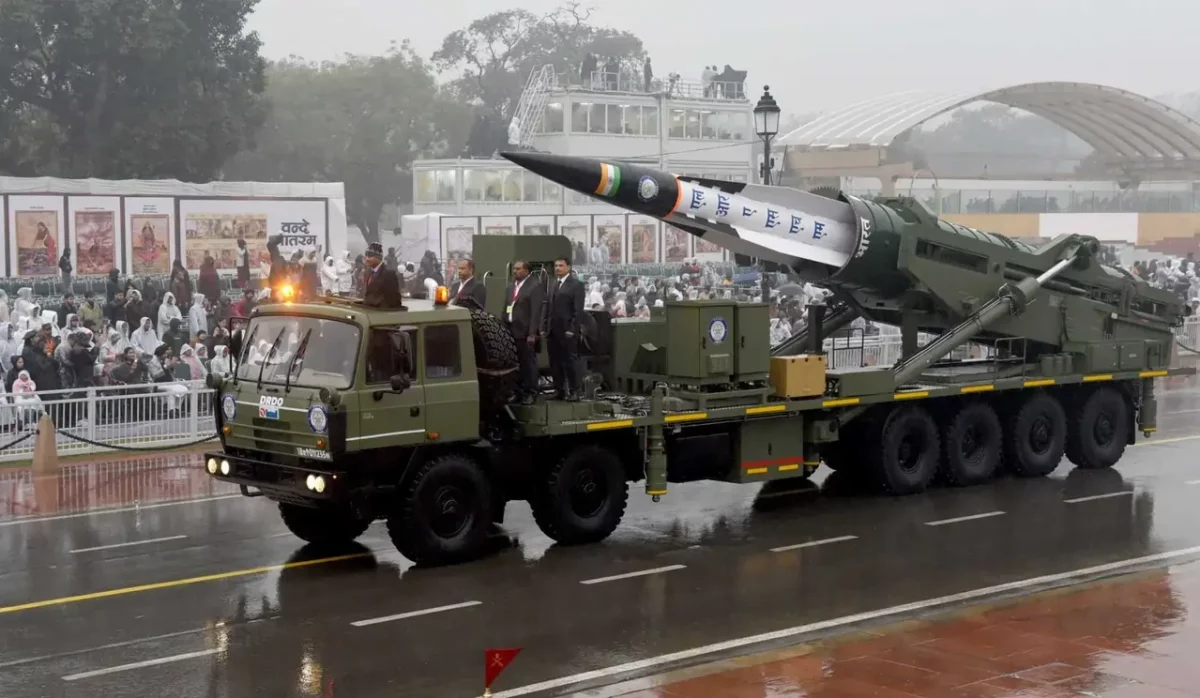
India is moving forward with efforts to strengthen its maritime defence capabilities with the development of the Long Range Anti-Ship Missile (LR-AShM), also referred to in some reports as LRHM. Developed by the Defence Research and Development Organisation (DRDO), the boost-glide hypersonic missile is reportedly being targeted for induction into service between 2027 and 2029. With a reported range of around 1,500 kilometres, the missile is designed to engage high-value maritime targets, including enemy warships, from considerable distances.
The LR-AShM is described as a two-stage solid-rocket-boosted hypersonic glide weapon. After launch, it is intended to transition into a gliding phase and manoeuvre towards its target at hypersonic speeds. Reports have cited a potential maximum speed of approximately 12,348 kilometres per hour, although operational performance figures and development milestones should be confirmed through official DRDO announcements. At such speeds, a flight covering 1,500 kilometres could theoretically take around 15 minutes, depending on the missile’s actual flight profile.
One of the missile’s key intended advantages is its manoeuvrability during flight. Unlike conventional ballistic trajectories, a hypersonic glide vehicle can follow a more complex flight path, potentially making interception more challenging for an adversary’s radar and missile-defence systems. The weapon is being developed primarily for coastal defence batteries of the Indian Navy, with future ship-launched or air-launched variants potentially expanding its operational applications.
The missile programme also highlights India’s growing focus on indigenous defence technology. The reported integration of locally developed sensors, avionics and guidance systems could improve accuracy while reducing dependence on foreign components. If successfully developed and inducted, the LR-AShM would strengthen India’s ability to deter hostile naval activity and protect its maritime interests, particularly across the strategically important Indian Ocean region.