





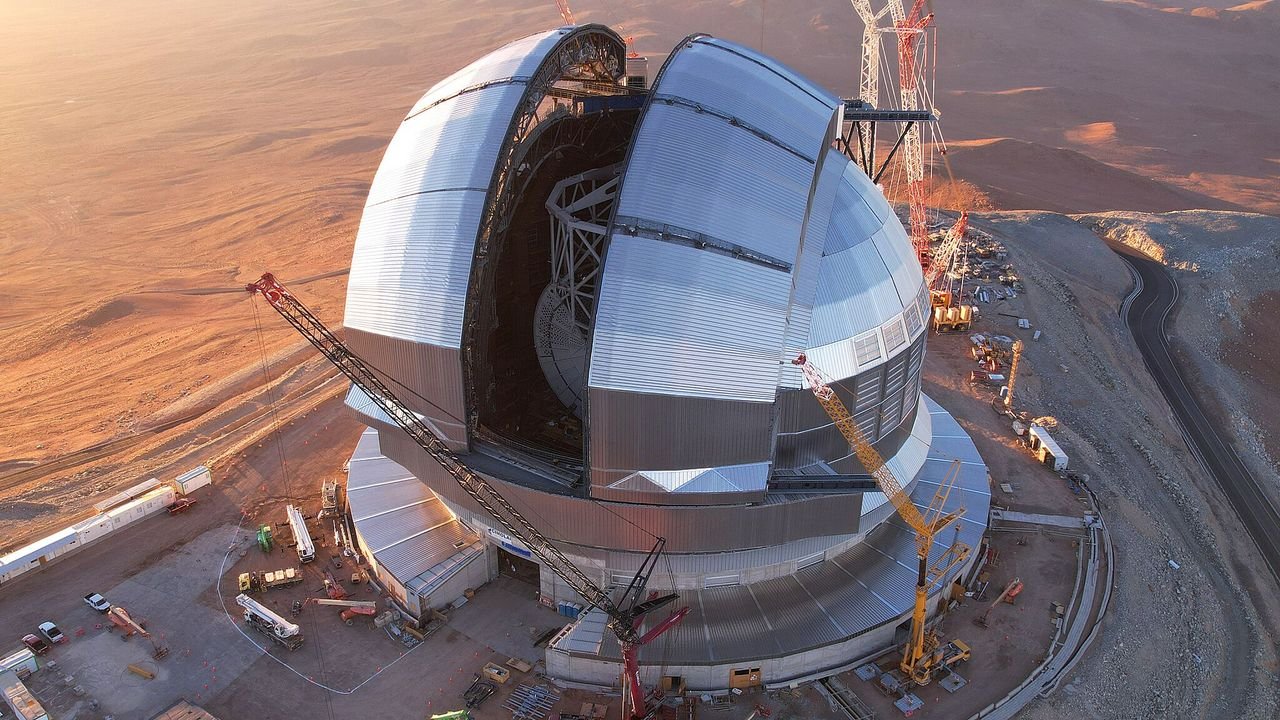
Humanity’s quest to understand the universe has reached another major milestone as the Extremely Large Telescope (ELT) being built in Chile’s Atacama Desert has crossed more than 70% completion. The European Southern Observatory’s massive telescope structure, weighing around 3,500 tonnes, has successfully been rotated on its axis for the first time—a crucial test of its ability to precisely track objects across the sky. With its enormous 39-metre primary mirror, the ELT is expected to be around 100 million times more powerful than the human eye and could deliver images far sharper than those from the Hubble Space Telescope.
Scientists hope to use it to study distant galaxies formed shortly after the Big Bang, investigate dark matter and dark energy, and most excitingly, examine Earth-like rocky exoplanets and their atmospheres for possible signs of conditions suitable for life. The telescope is currently expected to begin scientific observations by the end of 2030, potentially opening a new chapter in humanity’s search for answers about how the universe began—and whether life exists beyond Earth.